Saturday, June 16, 2012

Towering over the boardwalk WWFF-10

Observation towers raise the viewer up for a better vantage point. A watch tower is a strong point on a fortification wall. A look-out tower is used by the forest services to spot forest fires.


Weeedon Island Preserve 4 story tower with lightning rods and an up-sloping walkway

John Chestnut Park 3 story wood on wood tower in Lake Tarpon.


Walkway approach to the John Chestnut Observation Tower.


More like a two story gazebo, the Sawgrass Lake Park has a copper roof.


Emerson Point Preserve has a rickety tower, but it has the best view...

Wall Springs has the most substantial, solid Observation tower.
Most of the top deck is covered, adding to the strength and weather resistant design.


Lettuce Lake Park Tower uses galvanized steel and heavy cables for it's 2 1/2 story tower.


Showing the wear of many thaw-freeze cycles, the Clingmans Dome tower is concrete, and all ramp- no steps up 4 stories.


The concrete Shark Valley Everglades tower is similar to Clingmans Dome, but no mountain and shorter trees. 


Observation Tower at Boca Ciega Millennium Park. Salt tides take their toll on the posts and pilings.


Seven stories up, the Tower in Myakka River State Park has an appendage out the south side that goes to a three story tower...
So you go up a three story tower, across this tree top level boardwalk, to a seven story tower that goes above the tallest tree. Talk about towering over the boardwalk...


Then, there is this High-Tech Tower at Payne's Prairie (Florida) State Park, not in what it is built with but....


If you call the number on this plaque from your cell phone, and enter 3# for the location code, you get a recorded message with background music and sound effects. The 2nd story recording, like the view, is different from the 4th story message and view.

*************

For the complete photo digest of these visits, visit....
http://www.facebook.com/pages/Green-Scenes/420724504625089


CLICK THE LIKE BUTTON WHILE YOU'RE THERE FOR UPDATES.


Sunday, June 3, 2012

Sub-Tropical Tree Canopy walkway open to the public... WWFF-09

 Walking the Tree Tops

A boardwalk in the trees is not my fancy, too high...but I did it as part of my Photo Essay on boardwalks. for the full visit to the park see  http://www.facebook.com/pages/Green-Scenes/420724504625089 


The Myakka Canopy Walkway provides easy access to observe life in the treetops of an oak/palm hammock. As an outdoor laboratory for research and education, it is a place for discovery and opportunity for visitors to Myakka to see its canopy inhabitants up close. Completed in 2000, the structure was the first public treetop trail in North America.


The walkway is suspended 25 feet above the ground and extends 100 feet through the hammock canopy. A tower soars 74 feet in the air to present a spectacular view of treetops, wetlands and the prairie/hammock interface. You can look down on eagles, hawks, vultures and the tops of live oaks and palm trees.


 The Myakka Canopy Walkway was the inspiration of canopy scientist Dr. Margaret Lowman. After spending a couple of decades devising methods to study treetops in the forests of other continents, Dr. Lowman settled in as the director of Sarasota's Marie Selby Botanical Gardens.


Though her experience was with tropical ecosystems, she realized that Florida's forests were as imperiled as many of the legendary rain forests. Why not use the same methods employed to study and conserve canopies of far-away endangered forests to save our own threatened ecosystems?  Little research exists on the canopies of subtropical forests. Dr. Lowman's position provided an opportunity to augment current knowledge.

So this walkway is in Myakka River State Park ($4 entry fee, but the walk is free) and is open to the public. Quiet an extreme boardwalk....http://www.myakkariver.org/index.php/activities-a-attractions/canopy-walkway?showall=&limitstart=


Click a link  below, or copy and paste to your browser,  to go there!
A little bit of prose, some poetry, and a song- all about the environment.
http://billyholcoutdoors.blogspot.com/2012/05/whose-garden-was-this.html

A frank discussion about wilderness and nature.
http://wmgcenter.blogspot.com/2012/05/can-you-find-wilderness.html

Facebook pages about the outdoors.

Outdoor Photography

Hiking Trails, Boardwalks, and outdoor recreation construction topics
http://willwalkforfun.blogspot.com/

Good for one... WWFF-08

Good for one can be good for all.

I went to Corkscrew Swamp Sanctuary because "Ellas Trails" website said they had a unique boardwalk.  I'm a tree-hugger, but I started a photo essay on boardwalks so I drove three hours to see it.  I was not Disappointed.  You can see a full foto-tour of this boardwalk on  Green Scenes at  http://www.facebook.com/pages/Green-Scenes/420724504625089


The wood is NOT pressure treated. They did not want the pressure treating chemicals leaching out into the swamp or water. So...the got a tropical hardwood, sustainably grown, and built the boardwalk- almost 3 miles worth, out of that.

The birds were saved by Audubon, but they saved the trees, the bears, the panthers and the other swamp animails almost by accident.....and built a great boardwalk and education center. Thanks Ella's Trails! http://www.ellastrails.com/categories/47,43/search_type/and/order/default/   They have a search by state and trail surface (among others). I put on boardwalk and Florida and found the Corkscrew Swamp Sanctuary. 


From Audubon Florida about the Sanctuary-


"Corkscrew Swamp Sanctuary occupies approximately 13,000 acres in the heart of the Corkscrew Watershed in Southwest Florida, part of the Western Everglades. It is primarily composed of wetlands. These include the largest remaining virgin bald cypress forest in the world (approximately 700 acres), which is the site of the largest nesting colony of Federally Endangered Wood Storks in the nation. In addition to the wood stork, Corkscrew provides important habitat for numerous other Federal and State listed species, including the Florida Panther, American Alligator, Gopher Tortoise, Florida Sandhill Crane, Limpkin, Roseate Spoonbill, Snowy Egret, Tricolored Heron, White Ibis, Big Cypress Fox Squirrel and the Florida Black Bear. Several rare plants are also found here, most notably the Ghost Orchid.

                                                                     Sandhill Cranes


Corkscrew is in a strategically important location, and the quality of the natural resources here provides excellent habitat for wildlife. Our wetlands recharge the local aquifers, rivers and estuaries, providing the right conditions for fishing and coastal recreation as well as clean drinking water and water for agricultural productivity.

A variety of battles over birds, lumber, water and land spanning more than a century has transformed Southwest Florida. Much of the area bears little resemblance to its native roots, yet Corkscrew remains a vibrant wet wilderness. We are inextricably connected to our past and to our neighbors. The demand for resources and space presses on and in. Our ability to sustain some of our larger more charismatic creatures like the wood stork and panther is sure to be tested. We are a sanctuary for wild Florida, a living natural history repository open 365 days per year. We are committed to protecting and preserving this patch of ground for the benefit of the wild things that depend on Corkscrew.

                  Recycling nutrients from a 600 year old Cypress tree is turned into fern...


It was around 1900, when egret and heron plumes were in high demand for use in the fashion industry. By 1913, a deputized Warden of the Audubon Society named Rhett Green had begun serving as a guide for people like Thomas Gilbert Pearson, F.M. Phelps, Oscar E. Baynard and W. F. Blackman who were documenting the bird life found at Corkscrew. The combination of rookery protection and a campaign to stop the demand for the plumes was successful. The plume hunters went away, and so did the Audubon’s  wardens.

Systematic logging of South Florida cypress forests started in 1944 south of Corkscrew. Much of the lumber went to assist in the rebuilding of Europe after WWII. By the early 50's networks of logging roads were constructed and massive 500 year old trees were being pulled out. Locals were alarmed at the prospect of losing all the great cypress forests to logging and began a campaign to save the swamp. The National Audubon Society and a long list of organizations and individuals worked together to raise the support necessary to purchase the last expanse of virgin bald cypress left in the world, which also housed the largest and most important wood stork rookery in the United States. By 1954, 5,680 acres were secured (640 acres were a gift from Lee-Tidewater Cypress Company) and the Corkscrew rookery became Corkscrew Swamp Sanctuary.


In 1955, in the absence of any state interest in managing the swamp, Audubon took ownership of this great Corkscrew rookery. The initial Sanctuary was 5,680 acres. We eventually grew, adding an additional 5,320 acres, the latest acquisition was the Panther Island Mitigation Bank. Our fledgling sanctuary was accessible only by four-wheel drive vehicles along a remote dirt road.

More than ever, we are dependent on support and partnerships with private citizens, neighbors, elected officials and folks making land use decisions. We place a premium on educating all who will listen on the value of Corkscrew and natural areas.

Sunday, May 27, 2012

Selecting a trail route before construction WWFF-07

Routes and Layouts


Some trails lead to specific sites or vistas. If there is a very specific place hikers want to see, there should be a trail going there. A waterfall, Indian Mound, old homestead, or bird viewing blind are examples of specific destinations.
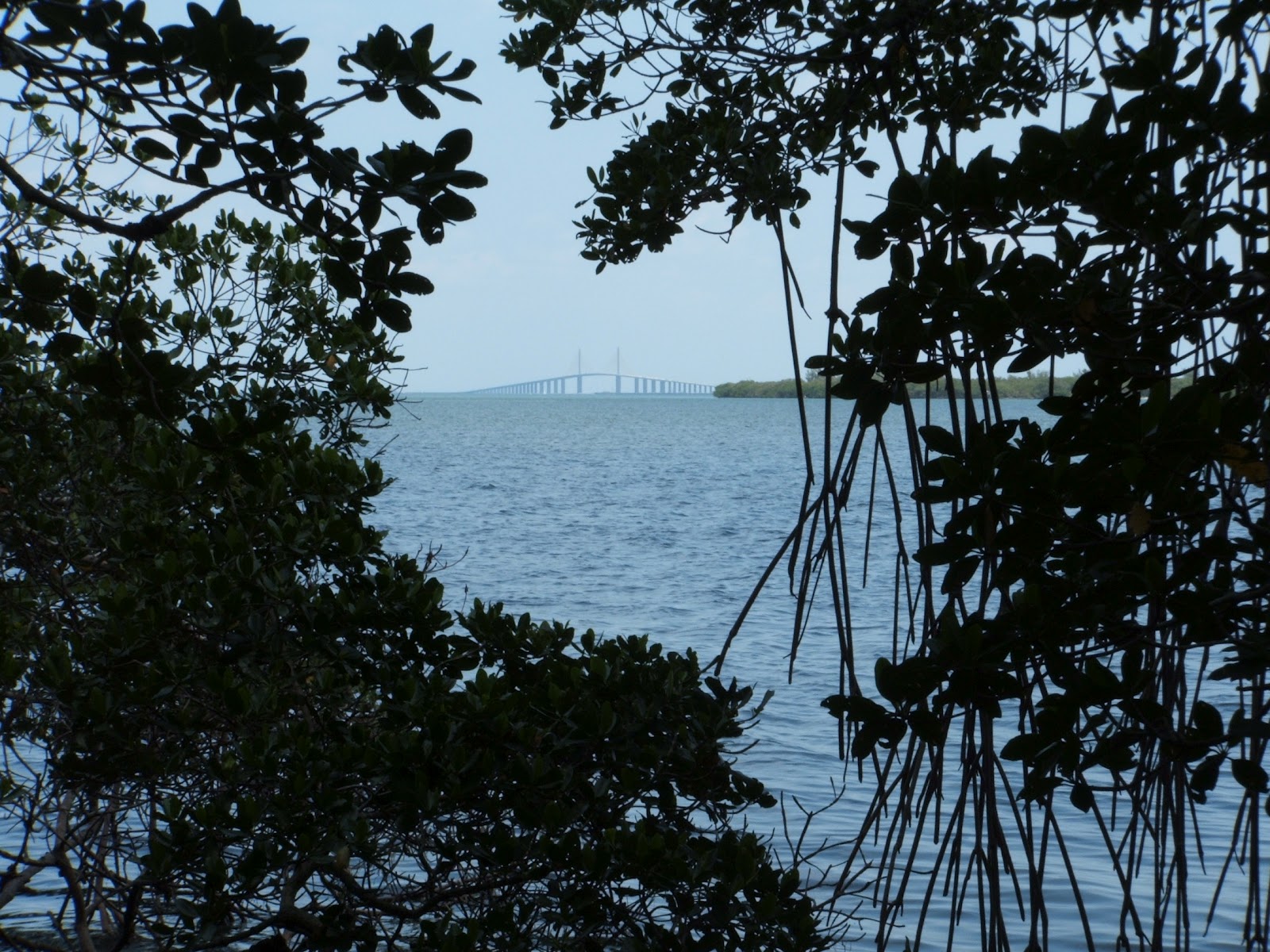
    There was no "Official" trail to this view, but there was a volunteer path to it, interrupted by the sign below. For twice the price of the sign, a boardwalk could have been put in to avoid damage to the mangrove root, and an ugly, rude sign would not have been needed.

If a designated trail does not go where people want to go, odds are that an unofficial trail will pop up anyway.

 If there is a trail that takes a circuitous route to that site, a map should be posted showing the trail route. To prevent volunteer trails, or braiding of trails, managers often use boardwalks with waist high handrails to keep people on the designated route. Signs and fencing are less friendly ways to keep people on trails, but are less expensive alternatives to a boardwalk.


When designing the trail routing, it is important to keep sight distances at 100 feet or less to draw the hikers view, and attention to the near field. Gentle curves and turns keep the user focused on the views and not the trail ahead. The one exception is a fitness trail, that needs long straight sections for runners and bicyclists. This lets the runners and cyclist see other users and obstructions with time to avoid collisions or prevent startling surprises.

    Putting this exercise path 6 feet further to the right, away from the wave action zone, could have prevented this.. Cutting back the mangroves to "Improve" the view als limits the root growth that could have naturally stabilized this area.

Forethought in trail layout can allow a gentler slope, avoid  wave action zones, and make approaches to road or stream crossings safer.


Changing the route of a trail, once established, can be difficult. Doing it right the first time saves costs, and is obvious to experienced hikers. Fences, signs, and even tall boardwalks may have trouble re-routing hikers intent on following the "old" path.
  Nominated for an "Outstanding Boardwalk" Award from the William Greenfield Center for Environmental Stewardship, Sawgrass Lake Park Boardwalks are wide, well maintained, and ADA Compliant.

Trail width should allow two adult hikes to pass side by side. Boardwalks should allow two wheelchairs to pass side by side. Wider spots on the trail can allow groups to gather, like at a particular view or be used for a rest bench.


In archeological sites, and other sensitive areas, trails are often very narrow. Narrow trails concentrate all the foot traffic into one small tread area.


This often leads to a "Cow Path" effect. Dairy cattle walk one behind the other, and can cut deep into topsoil in a short time. Once established, the cows use the same narrow trampled surface, forming a trough that leads to erosion.
 
To avoid this, managers often use crushed rock or shell and put logs or landscape timbers on both sides of the trail. This slows or prevent erosion and helps delineate the permissible walking area.


Click a link  below, or copy and paste to your browser,  to go there!

A little bit of prose, some poetry, and a song- all about the environment.
http://billyholcoutdoors.blogspot.com/2012/05/whose-garden-was-this.html

A frank discussion about wilderness and nature.
http://wmgcenter.blogspot.com/2012/05/can-you-find-wilderness.html

Facebook pages about the outdoors.

Outdoor Photography

Hiking Trails, Boardwalks, and outdoor recreation construction topics
http://willwalkforfun.blogspot.com/

Friday, May 25, 2012

Steps on Trails WWFF-06


Stairs in general

Tread design and spacing on stairs are not only important to ascetics, but safety is paramount to anyone that must use the stairs.


The visibility of steps is critical to ensure that a person can prepare to coordinate their gait during stair ascent and decent. For people with normal vision this relies on visual clues such as handrails, depth perception and visibility of step nosing. Poor delineation of the step edge may confuse people negotiating the stairs increasing the risk of a miss step.


In the absence of contaminants on the stair tread, frictional factors play a minor role in stair safety during descent for interior stairs that are clean and dry. For outdoor stairs,  the slip resistance can be a significant factor and stair treads should be naturally course or treated with adhered grit. Composite lumber made from plastics can be very slippery when wet, even from dew.


Handrails provide a visual clue that there are steps present. Handrails reduce the risk of a miss-step by increasing postural stability and assisting as a fall restraint.


The dimensional geometry of stairs should establish a suitable gait pattern that is consistent throughout the flight of stairs. The dimensions of stair risers should be between 115 - 190 mm.  Stair steps should be greater than 300 mm as the risk of over stepping over the edge of the stair is significantly reduced. Dimensional inconsistency of stair steps and risers can have a tremendous impact on a person’s gait and balance, and are generally not visually obvious. Stairs with an irregularity as little as 6 mm between adjacent rise and runs can disrupt foot movements enough to cause a fall. A person has an expectation of a certain distance at which to place their foot at each step. If that expectation is not met, a fall can result from a misstep. This most often occurs when the stair step dimensions are reduced significantly near the bottom of stairs when the pedestrian has built a degree of confidence of where the next step will be to ensure proper safe foot placement.


Open steps with no vertical face allow for faster drying, and allow the wind to clear leaf litter and debris. They allow light through, but might make people that are wary of heights nervous and uncomfortable. Faced steps are more structurally sound, and usually show fewer effects from weathering. They also have less felt wind by the user.Although it adds cost and weight to a structure, enclosing the face of steps (vertically between the steps) can help with structural soundness, and with confidence in children and others nervous with heights.


Steps can limit the access to an area for people with mobility issues, and there is usually an alternate route offered with an inclined ramp or circuitous route.


Open tread “steps” within a trail are a cross between erosion control and a stair. They are an open top box, with board sides to prevent soil movement. They are not ADA friendly, but allow a foot path to climb quickly in a steep environment. They are longer laterally along the trail, but their open design allows more people on the structure at one time than a set of traditional stairs.


Ladders are typically used for service structures and egress. Once used for final climbs in structures like the Blackhawk Statue in Oregon Illinois and the Shark Valley Observation Tower in the Everglades, they are no longer used for liability reasons.


Transitions from boardwalk to trail may have steps, but more often the boardwalk is sloped down below the trail surface. The transition to asphalt or concrete trail surface from a boardwalk is usually a well-defined edge. Transition to dirt, gravel, or crushed shell trail surface requires the boardwalk to be angled in to a position well below the soil level to avoid guttering at the transition.